 By Rahul Vats
 The Internet of Things (IoT) has quietly moved from a futuristic idea to something businesses use every day. From smart homes to industrial automation, IoT is shaping how companies earn, deliver, and scale their services. But behind every successful IoT product, there is a clear business model. Without that, even the best technology struggles to survive.
Let’s break it down in a simple way.
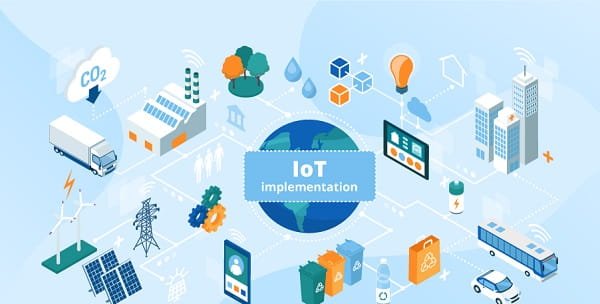
What is an IoT Business Model?
An IoT business model explains how a company creates value using connected devices and how it earns money from that value.
At its core, IoT connects physical devices—like sensors, machines, or home appliances—to the internet. These devices collect and share data. That data is then used to improve services, automate tasks, or offer new solutions.
A typical IoT business model has three parts:
- Devices (hardware) – Sensors, smart gadgets, machines
- Connectivity – Internet or network that links devices
- Data & Services – Software that analyzes data and creates value
In simple terms, IoT is not just about selling a product. It is about selling an ongoing service powered by data.
Key Types of IoT Business Models
1. Product-Based Model
Here, companies sell IoT-enabled devices.
Example: Smartwatches or smart home devices
The revenue comes mainly from the product sale.
But this model is slowly evolving, because just selling hardware is often not enough for long-term profits.
2. Subscription-Based Model
This is one of the most popular IoT models today.
Customers pay a monthly or yearly fee to use services connected to the device.
Example:
- Smart security cameras with cloud storage plans
- Fitness devices offering premium analytics
This model creates steady income for businesses.
3. Data-Driven Model
In this model, companies collect data from IoT devices and monetize it.
They may:
- Sell insights to other businesses
- Use data to improve internal operations
Example: A logistics company using IoT sensors to track vehicle performance and reduce fuel costs.
4. Pay-Per-Use Model
Users pay based on how much they use a service.
Example:
- Smart electricity meters
- Shared mobility services
This model works well where usage varies from customer to customer.
5. Platform-Based Model
Companies create a platform where devices, users, and services connect.
They earn through:
- Service fees
- Partnerships
- App ecosystems
Example: Industrial IoT platforms that connect machines, analytics tools, and third-party apps.
Real-World Examples of IoT Business Models
Smart Home Ecosystem
Devices like smart lights, thermostats, and security systems are connected and controlled through apps.
Companies often combine:
- Device sales
- Subscription services
- Data insights
Industrial IoT (IIoT)
Factories use IoT sensors to monitor machines.
This helps in:
- Predictive maintenance
- Reducing downtime
- Improving efficiency
Companies earn by offering monitoring systems and analytics services.
Healthcare IoT
Wearable devices track health metrics like heart rate, sleep, and activity.
Revenue comes from:
- Device sales
- Health insights subscriptions
- Partnerships with healthcare providers
Agriculture IoT
Farmers use sensors to monitor soil, weather, and crops.
This improves:
- Yield
- Water usage
- Cost efficiency
Businesses offer IoT solutions as a service to farmers.
Advantages of IoT Business Models
1. Recurring Revenue
Subscription and service-based models ensure steady income instead of one-time sales.
2. Better Customer Insights
IoT devices generate real-time data.
This helps companies:
- Understand user behavior
- Improve products
- Offer personalized services
3. Improved Efficiency
IoT helps automate processes.
Example:
- Smart factories reduce manual work
- Logistics companies optimize routes
This leads to cost savings.
4. New Revenue Streams
Companies can monetize data, offer premium services, or partner with other businesses.
IoT opens doors that traditional models never had.
5. Strong Customer Engagement
Connected devices keep users engaged through apps and updates.
This builds long-term relationships.
Disadvantages of IoT Business Models
1. High Initial Investment
Setting up IoT systems requires:
- Hardware
- Software development
- Infrastructure
This can be expensive, especially for small businesses.
2. Security Risks
IoT devices are connected to the internet, which makes them vulnerable.
Risks include:
- Data breaches
- Unauthorized access
Security is a major concern in IoT.
3. Data Privacy Issues
Companies collect large amounts of user data.
If not handled properly, it can lead to:
- Legal problems
- Loss of customer trust
4. Complex Ecosystem
IoT involves multiple components:
- Devices
- Networks
- Software platforms
Managing all of these together can be challenging.
5. Dependence on Connectivity
IoT systems rely heavily on internet connectivity.
If the network fails:
- Devices may stop working
- Services may be interrupted
Challenges in IoT Business Models
Even with strong advantages, IoT businesses face real challenges:
- Standardization issues – Different devices may not work well together
- Scalability problems – Managing millions of devices is not easy
- Regulatory concerns – Data laws are becoming stricter
- Customer adoption – Some users still hesitate due to privacy concerns
Companies need to plan carefully to overcome these issues.
Future of IoT Business Models
The future of IoT looks strong and practical.
We are already seeing trends like:
- AI integration with IoT (smart decision-making)
- Edge computing (faster data processing)
- 5G networks (better connectivity)
These will make IoT systems faster, smarter, and more reliable.
Businesses will shift more towards:
- Service-based models
- Data monetization
- Ecosystem partnerships
IoT will no longer be just a technology—it will become a core part of business strategy.
Conclusion
IoT business models are changing how companies operate and earn. Instead of simply selling products, businesses are now offering connected experiences powered by data.
From smart homes to industrial systems, IoT is everywhere. But success in this space depends on choosing the right model—whether it is subscription-based, data-driven, or platform-focused.
At the same time, companies must handle challenges like security, cost, and complexity carefully.
In the end, IoT is not just about devices. It is about creating value through connection, insight, and continuous service.