 By Rahul Vats
 When you book a cab on Uber, order dinner from Swiggy, or compare flight prices on MakeMyTrip, you’re using one of the most disruptive business ideas of the digital era — the aggregator business model. None of these companies owns a single car, restaurant, or aircraft, yet they generate billions in revenue and have reshaped entire industries. This is the quiet power of aggregation: bringing fragmented, unorganised service providers under one trusted brand and one seamless user experience. Let’s break down what this model is, how it works, who’s winning at it, and the trade-offs involved.
What Is the Aggregator Business Model?
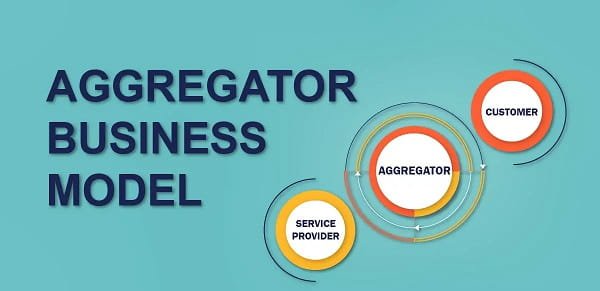
An aggregator is a digital platform that collects information about products or services from multiple competing providers in a single industry and presents it to consumers under a single unified brand. The aggregator never actually owns the underlying inventory — no fleet of cars, no kitchens, no hotel rooms. Instead, it signs partnership contracts with independent providers, sets quality and pricing standards, builds the technology layer, and manages the entire customer experience.
The defining trait that separates aggregators from regular marketplaces is brand control. On Amazon (a marketplace), every seller carries their own brand. On Uber (an aggregator), every driver delivers a service under the Uber brand at standardised prices and quality.
How the Model Works
The mechanics are surprisingly simple:
- The aggregator builds a digital platform — usually a mobile app or website.
- It onboards independent service providers (drivers, restaurants, hotels, freelancers) after verification.
- It enforces uniform quality standards, pricing rules, and service guidelines through partnership contracts.
- Customers discover, compare, and transact on the platform.
- The aggregator earns through commissions on each transaction, subscription fees, advertising, sponsored listings, or data monetisation.
The providers stay independent — they’re never employees — but they agree to operate under the aggregator’s terms in exchange for access to a massive customer base.
Real-World Examples
The aggregator model has touched almost every industry imaginable:
- Ride-hailing: Uber and Ola aggregate independent drivers into one app and a single fare structure.
- Food delivery: Swiggy and Zomato connect thousands of restaurants with customers, handling discovery, payment, and last-mile delivery.
- Travel: MakeMyTrip, Goibibo, and Skyscanner aggregate flights and hotels from countless airlines and chains.
- Accommodation: Airbnb pools millions of property owners worldwide into a single, branded booking experience.
- Jobs: Naukri and Indeed aggregate job listings from thousands of employers.
- Bus travel: redBus consolidates private bus operators across India.
Advantages of the Aggregator Model
- Asset-light and highly scalable. Aggregators don’t buy cars, build hotels, or stock warehouses. Their main investments are technology, branding, and marketing — letting them grow internationally with low capital and add new partners faster than traditional businesses ever could.
- Massive convenience for consumers. Users get a single platform to compare prices, read reviews, and complete transactions, eliminating the need for dozens of phone calls or website visits. This convenience is the model’s core value proposition.
- Strong network effects. More providers attract more users, and more users attract more providers. Once an aggregator achieves critical mass, it becomes hard for new entrants to displace, creating a defensible moat.
- Multiple monetisation streams. Aggregators can earn through commissions (Uber takes ~25% per ride), subscriptions (Amazon Prime, Spotify), sponsored listings, CPC advertising, or selling anonymised data and APIs.
- Win for small providers. Independent restaurants, drivers, and homeowners gain instant access to a customer base they could never reach on their own. The aggregator handles marketing, payments, and tech — they just deliver the service.
- Standardised quality and trust. Strict onboarding, rating systems, and service guarantees give consumers confidence when dealing with strangers — something fragmented industries have historically struggled to offer.
Disadvantages of the Aggregator Model
- Quality control is genuinely hard. The aggregator promises a consistent experience, but thousands of independent providers deliver the actual service. One rude driver or one bad meal can damage the entire brand.
- Heavy dependence on partners. If providers organise, leave the platform, or onboard with competitors, the aggregator’s supply collapses. Drivers and restaurants frequently work with multiple platforms simultaneously.
- Cut-throat competition and low entry barriers. Once one aggregator proves a market, copycats flood in. Swiggy vs. Zomato, Uber vs. Ola, MakeMyTrip vs. Yatra — these wars have burnt billions in cash on discounts and incentives.
- Slim margins and a long road to profitability. Heavy discounting, driver/partner incentives, and customer acquisition costs mean many aggregators bleed cash for years before turning a profit. Several never do.
- Regulatory pressure. Governments worldwide are tightening rules on gig-economy aggregators around minimum wages, worker classification, data privacy, and pricing. India’s recent platform-worker regulations and Europe’s Digital Markets Act are clear examples.
- Squeezed partners. Once dominant, aggregators can dictate harsh commission rates, sometimes leaving providers with razor-thin margins — exactly what airlines now feel against Google Flights.
Final Word
The aggregator model has redrawn the map of modern business by replacing inventory with information, ownership with orchestration, and fragmentation with experience. It has democratised access for both consumers and small providers, but it isn’t a free lunch — capital-intensive battles, tricky quality control, and growing regulation are real headwinds. For any entrepreneur eyeing this space, the lesson is clear: in aggregation, the user experience is the moat. The platform that owns the customer wins.